AI Impact on Software Markets: BharatGen Insights from CP Gurnani & Prof. Ganesh Ramakrishnan
In a recent discussion, CP Gurnani (former CEO of Tech Mahindra) and Professor Ganesh Ramakrishnan shared practical perspectives on how AI is influencing global software markets and India’s homegrown initiatives. The conversation covered market reactions, enterprise shifts, and India’s strategic AI efforts like BharatGen. Here’s a clear breakdown based on the session summary.
Anthropic's Launch and the $285 Billion Selloff
Anthropic’s updated Claude tool, featuring 11 plugins for workflow automation, triggered a sharp $285 billion drop in software stocks. Investors feared it would disrupt traditional enterprise software models by reducing reliance on external vendors.
CP Gurnani viewed this as an overreaction. He pointed to strong quarterly results from companies like TCS, Cognizant, and Tech Mahindra, arguing that AI enhances SaaS value by automating routine tasks like data migration.
AI as an Enterprise Copilot
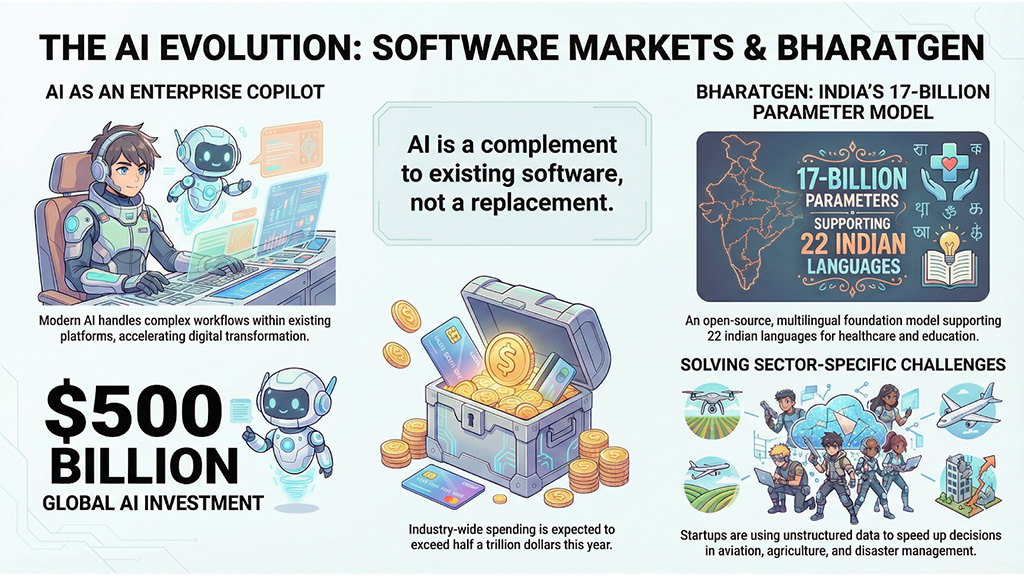
The panel described AI evolving from simple search tools to integrated copilots that handle complex workflows within existing platforms. This shift accelerates digital transformation in enterprises and challenges legacy outsourcing models.
Gurnani noted it pressures service delivery but ultimately makes software more essential as a utility.
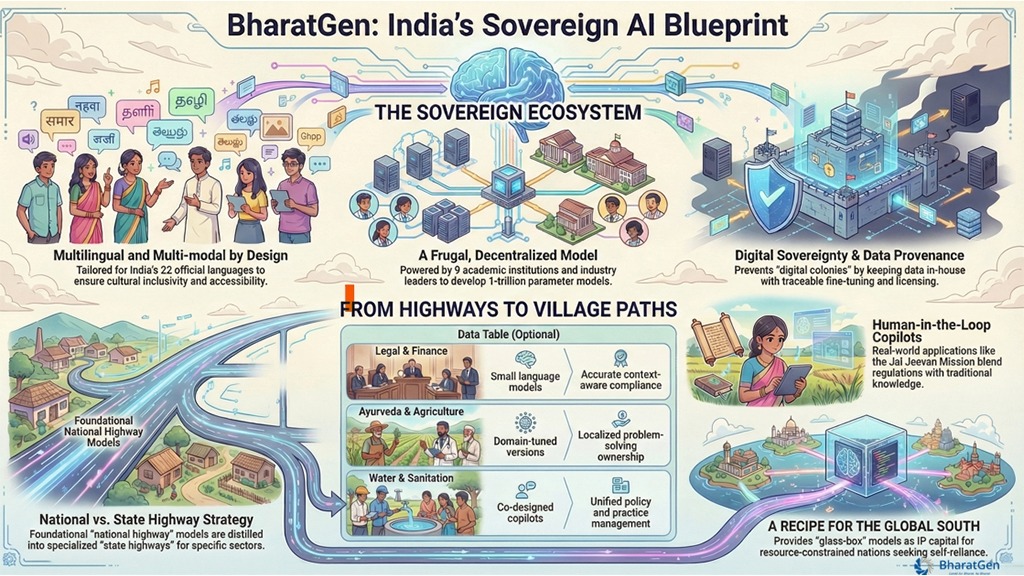
BharatGen: India's Multilingual AI Model
Professor Ramakrishnan detailed BharatGen (referred to as Bharat Jain in the summary), a 17-billion parameter foundation model supporting 22 Indian languages. It’s set to launch at the India Impact Summit later this year.
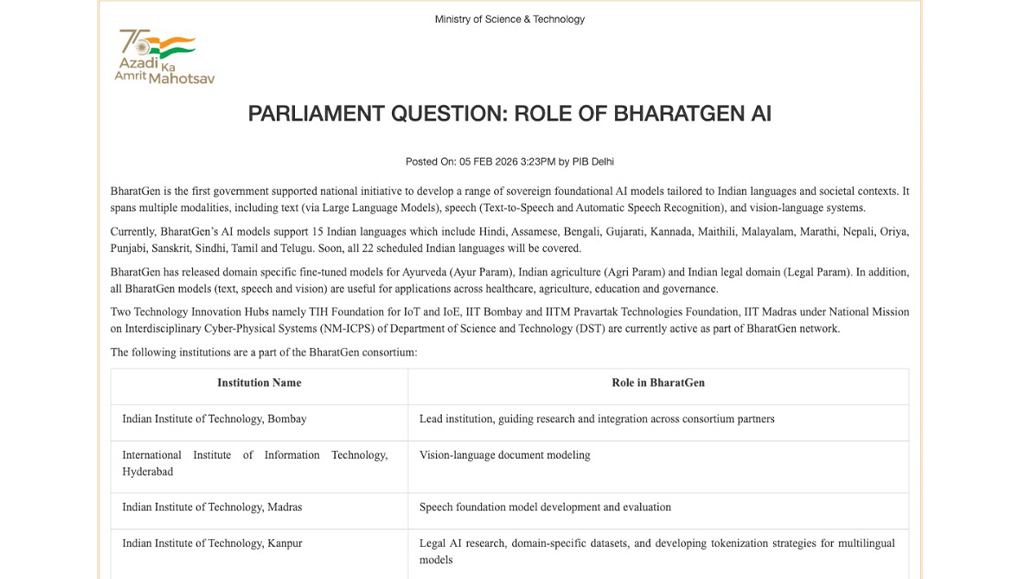
Developed by a consortium of nine academic institutions, the open-source model focuses on sovereign AI for speech, document vision, and domain-specific applications in healthcare and education. It emphasizes collaboration between government, academia, and industry to ensure data control and national security.
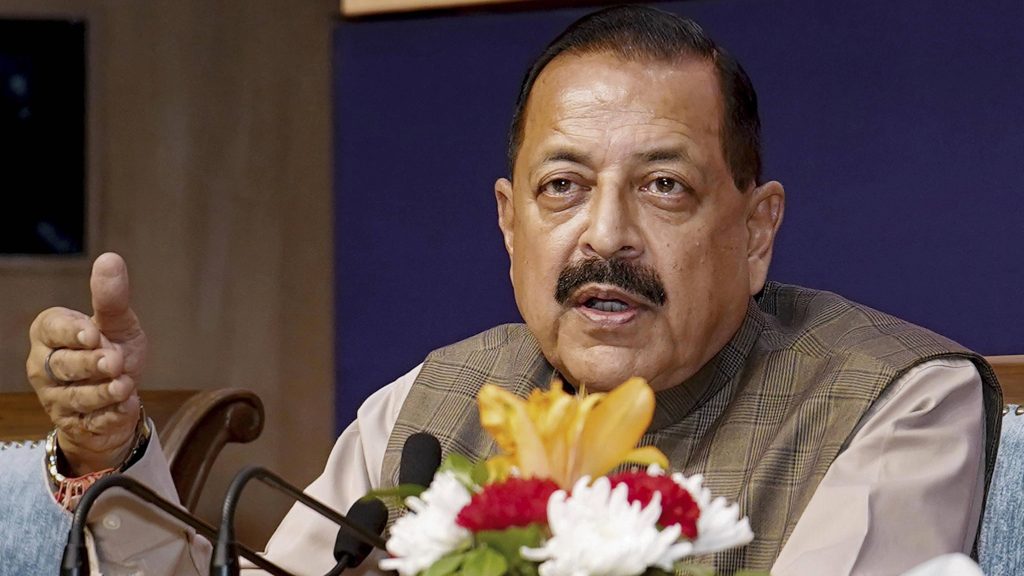
No mention of Minister Jitendra Singh’s Rajya Sabha intervention appeared in the summary.
Indian AI Startups and Real-World Applications
India’s AI startup ecosystem is targeting sector-specific challenges in life sciences, aviation, and agriculture. Gurnani highlighted examples like Ionos, which processes unstructured data to speed up decisions in critical areas like disaster management.
With data from 1.4 billion people, these tools offer advantages in healthcare, education, and farming, positioning India to serve domestic and Global South markets.
Funding Deep Tech Through Collaboration
Scaling AI requires patient capital and stronger public-private ties. Ramakrishnan pointed to the RDI fund as a mechanism for government and industry to co-invest in deep tech startups.
This approach aligns academic research with industry needs, drawing parallels to successful models in other countries.
Global AI Investment Trends
Major players like Alphabet project $175-185 billion in capital expenditure for 2026, more than double last year’s AI spend. Industry-wide, AI investments are expected to exceed $500 billion this year, signaling a move toward AI-embedded enterprise workflows.
Key Takeaways
The discussion positioned AI as a complement to software rather than a replacement, with BharatGen exemplifying India’s focus on tailored, collaborative solutions. It highlighted opportunities in domain-specific innovation and the need for sustained partnerships.
Action items included expanding AI in sectors like aviation (Gurnani) and advancing BharatGen demos alongside RDI fund promotion (Ramakrishnan).
This conversation offers a grounded view on adapting to AI-driven changes. What are your thoughts on BharatGen’s potential? Share in the comments.
The conclave reinforced a clear national consensus:
Source: PM Modi LinkedIn