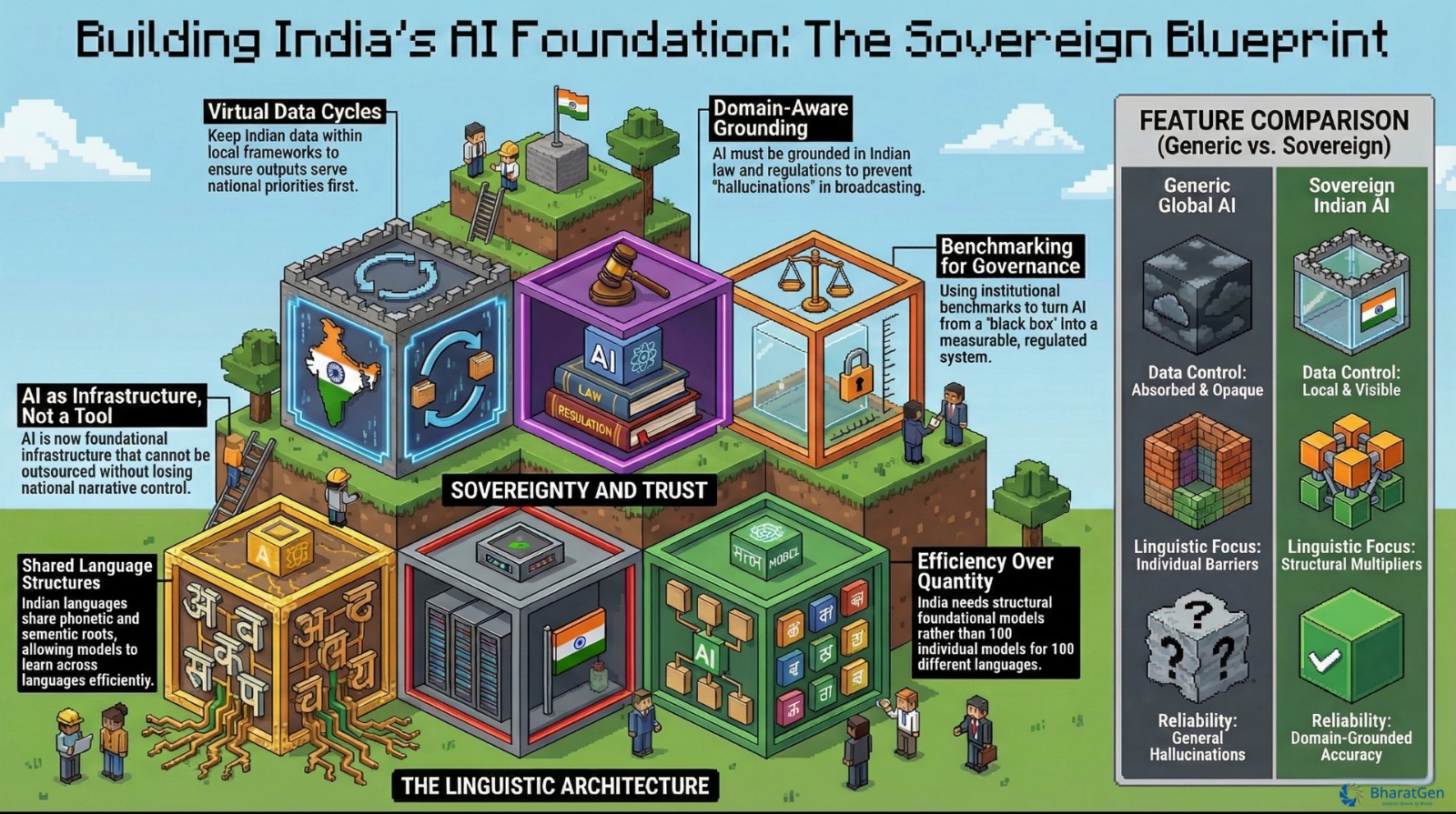
Building AI for India: BharatGen’s Vision for Sovereign, Accessible AI
On January 30, a quiet but important conversation took place.
It was not about flashy demos or chasing global AI headlines.
How do you build AI that truly works for India?
But designed from the ground up for Indian realities.
That is the question BharatGen set out to answer. And if you listen carefully, his answers reveal a very different blueprint for India’s AI future.
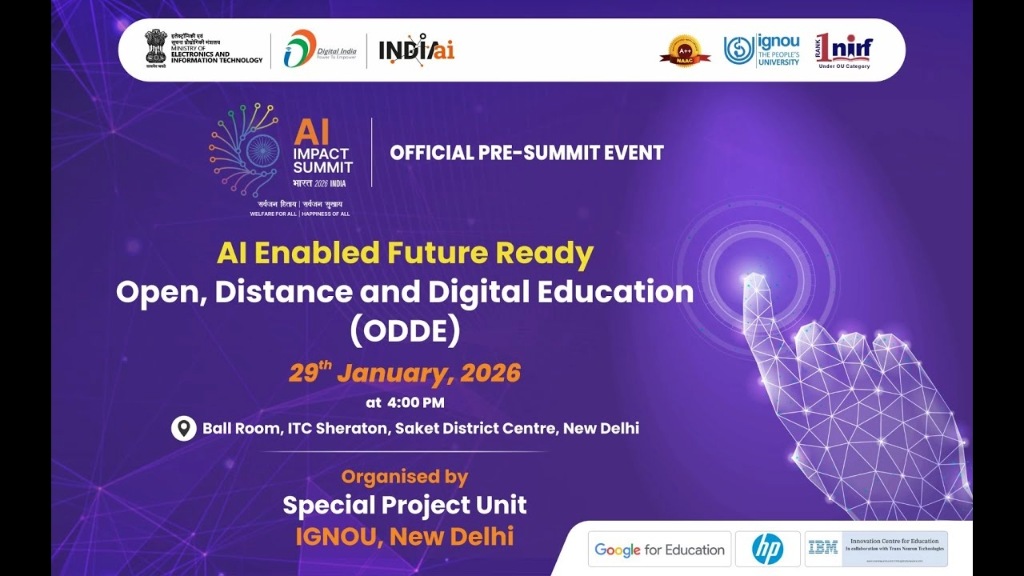
Alt: Building AI for India: BharatGen’s Vision for Sovereign, Accessible AI
The big idea first: sovereignty before scale
The most important takeaway from the session is this:
India cannot depend on external AI systems for its most critical needs.
This is not about nationalism. It is about reliability, trust, and long-term control.
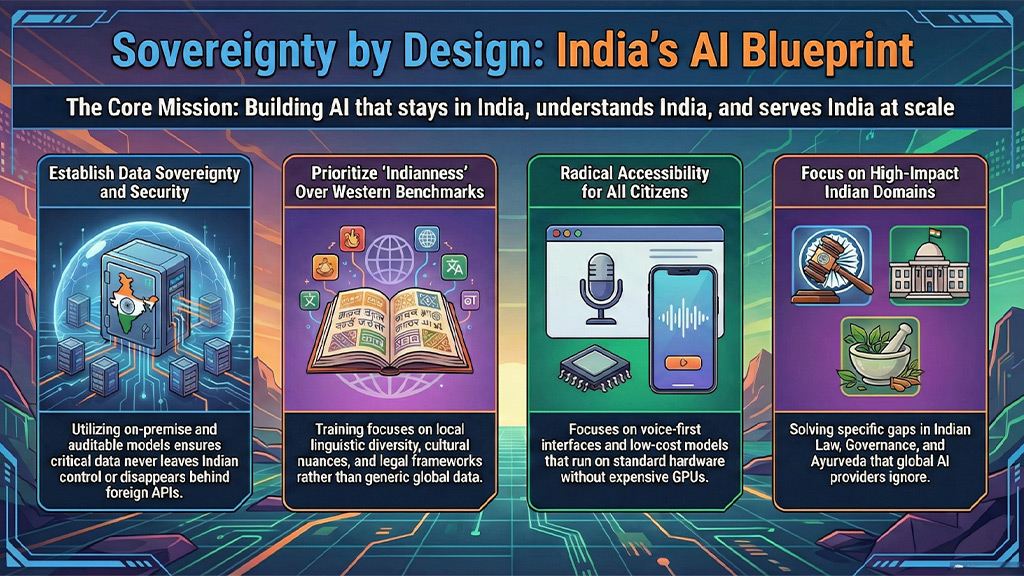
Bharat Gen is building a government-funded AI platform with three non-negotiable pillars:
1. Sovereignty
AI systems must always be available, auditable, and fully transparent.
Government and enterprise users cannot afford black boxes that disappear behind foreign APIs. They need to know:
- Where data goes
- How models behave
- What happens when something breaks
That is why on-premise and co-located AI models are central to the platform, not optional extras.
2. Indianness
India is not one language, one accent, or one worldview.
AI trained primarily on Western data misses:
- Indian linguistic diversity
- Cultural context
- Historical and legal nuances
The goal here is not translation.
It is representation.
AI that understands India the way Indians live it.
3. Accessibility
Most AI products assume high literacy, high bandwidth, and high budgets.
India does not work that way.
So this platform prioritizes:
- Voice-first interfaces
- Low-cost deployment
- Models that work even without GPUs
Accessibility is not a feature. It is the foundation.
Why this is not just another AI lab
Behind this vision is a very deliberate execution model.
The platform brings together:
- Academic researchers
- Industry engineers
- Over 50 experts from top IITs and leading companies
They are already working with trillions of tokens of data at scale.
This blended consortium model matters because it avoids two common traps:
- Pure research that never ships
- Pure product that never generalizes
Instead, it creates a feedback loop between theory and real-world use.
Domain-specific AI: solving problems others ignore
One of the most telling examples discussed was Ayurveda-focused language models.
This is not a niche experiment.
It is a signal.
Global AI providers rarely invest in domains that matter deeply to India but lack global commercial appeal.
So BharatGen’s team built domain-specific models where the gaps are largest:
- Ayurveda
- Legal and governance
- Indian policy and documentation
These models are not locked away.
They are released openly on platforms like Hugging Face so others can build on top of them.
Instead, they design real-world evaluation metrics that reflect Indian use cases.
The question is not “Does the model score well globally?”
The question is “Does it work where it actually matters?”
Why most AI pilots fail in India
One of the strongest parts of the session was the honest breakdown of why AI projects collapse after promising pilots.
BharatGen outlined three blockers that appear again and again.
Security and data sovereignty
Sending sensitive documents to external APIs is a non-starter for many organizations.
On-premise AI is not about preference.
It is about compliance and risk.
- Security improves
- Troubleshooting is faster
- Accountability is clearer
Cost overruns
API-based AI often looks cheap at first.
Then token usage grows.
Budgets explode.
Finance teams shut projects down.
Predictable costs matter more than theoretical performance.
Lack of customization
A model that works 99 percent of the time still fails in:
- Legal workflows
- Financial systems
- Governance processes
Near-perfect accuracy is not optional in these domains.
That means fine-tuning, compression, and hardware-aware deployment.
Not one-size-fits-all APIs.
Where this AI actually gets used
The platform is not chasing abstract demos.
It is targeting problems India struggles with every day.
- Legal workflows
- Financial systems
- Governance processes
Document digitization
India runs on paperwork.
Much of it is poorly scanned, badly printed, or decades old.
AI here must read:
- Noisy inputs
- Mixed languages
- Inconsistent formats
This directly impacts loans, licenses, and public services.
Speech AI for real accents
Voice interfaces only work if they understand how people actually speak.
That means:
- Regional accents
- Dialect variations
- Code-mixed language
This is especially important for citizens with low literacy.
Governance and transparency
AI can help:
- Government employees interpret complex policies
- Citizens access legal and regulatory information
When done right, this reduces friction and improves trust in public systems.
Talent, not just technology
Another quiet but powerful insight was the focus on people.
Over 100 interns are already involved across:
- BTech
- MTech
- PhD
- Postdoctoral programs
The goal is not short-term output.
It is long-term capacity.
By publishing:
- Models
- Datasets
- Benchmarks
- Training recipes
The platform turns itself into a learning engine for the entire ecosystem.
Hackathons and open challenges are not marketing tactics here.
They are how a self-sustaining AI community gets built.
The roadmap ahead
Looking forward, the strategy is deliberately practical.
- Multiple model sizes so organizations can choose based on cost and infrastructure
- Support for CPU-only and heterogeneous hardware environments
- Deep focus on legal and governance AI where demand already exists
- Full transparency through open publication of data, weights, and methods
This is not about locking users in.
It is about pulling the ecosystem forward.
The real takeaway
This session was not about announcing another AI product.
It was about redefining what success looks like for Indian AI.
Not biggest model.
Not loudest launch.
But AI that:
- Stays in India
- Understands India
- Serves India at scale
If this approach succeeds, it will quietly reshape how AI is built, deployed, and trusted across the country.
The conclave reinforced a clear national consensus:
Source: PM Modi LinkedIn