AI in Open and Distance Education India: Rethinking Scale, Access and Inclusion
3.9 million learners.
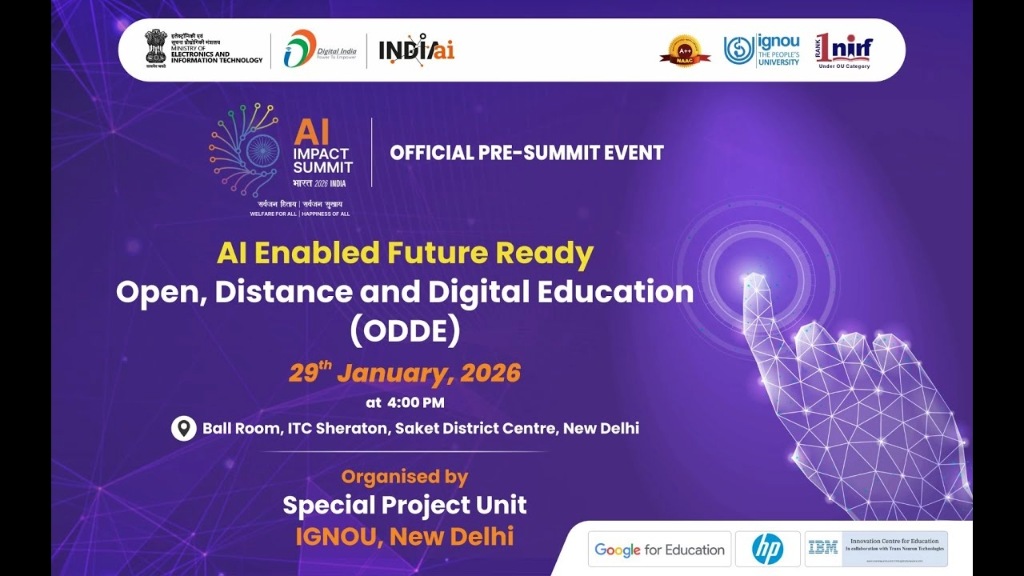
That’s not a statistic you casually move past. That’s an entire country’s worth of students, logging in every day with different languages, motivations, bandwidth constraints, life pressures, and aspirations. And that is when it became clear why this conversation around AI-enabled Open, Distance and Digital Education (ODDE) was not about trends, tools or buzzwords.
It was about survival of the education system itself.
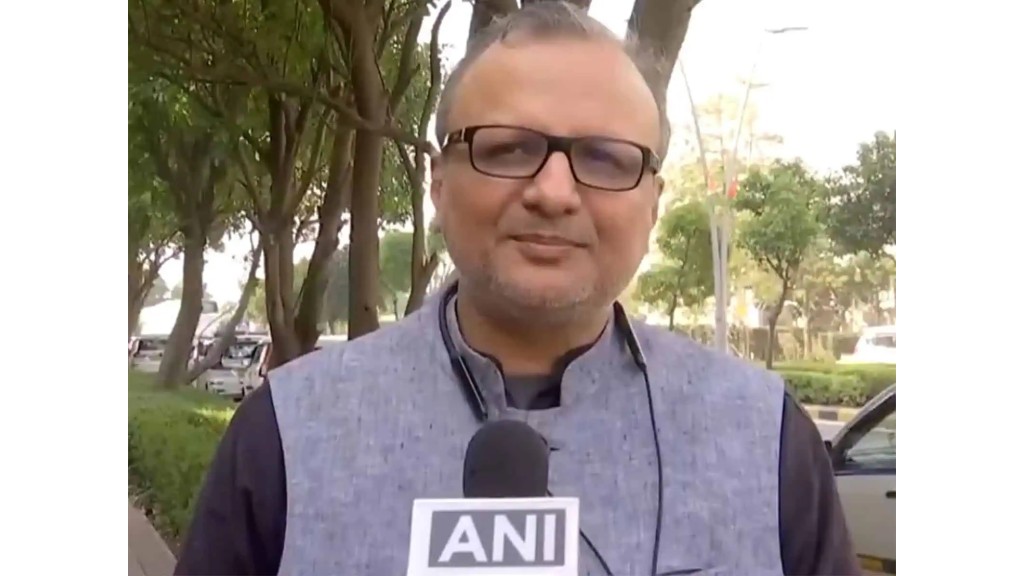
When Prof. Ganesh Ramakrishnan spoke, he didn’t frame AI as disruption. He framed it as inevitability — and more importantly, responsibility.
Why scale breaks traditional education
Open and distance learning has always promised access. But access without quality quietly turns into exclusion.
At the scale of institutions like Indira Gandhi National Open University, human-centric systems begin to fracture. Faculty cannot respond to every learner. Counselors are stretched thin. Curriculum updates lag behind industry change. Assessment integrity becomes fragile.
The pandemic didn’t create these cracks. It exposed them.
What AI offers here is not automation for its own sake. It offers continuity, consistency, and presence — especially when human presence is unavailable.
As one panelist put it plainly
AI is not a luxury for ODDE. It is the only way it functions at scale.
Alt: AI in Open and Distance Education India
From digital universities to agentic ones
One of the most compelling ideas discussed was the move toward what was called an agentic university.
Not a university run by machines, but one where AI increases the agency of everyone involved
- Learners gain personalized pathways instead of one-size-fits-all content.
- Faculty gain intelligent assistants rather than administrative overload.
- Institutions gain visibility into outcomes rather than just enrollment numbers.
This is not about replacing judgment. It is about freeing humans to exercise better judgment.
The alignment with India’s National Education Policy 2020 felt intentional rather than accidental. The message was clear: technology must serve learning, not the other way around.
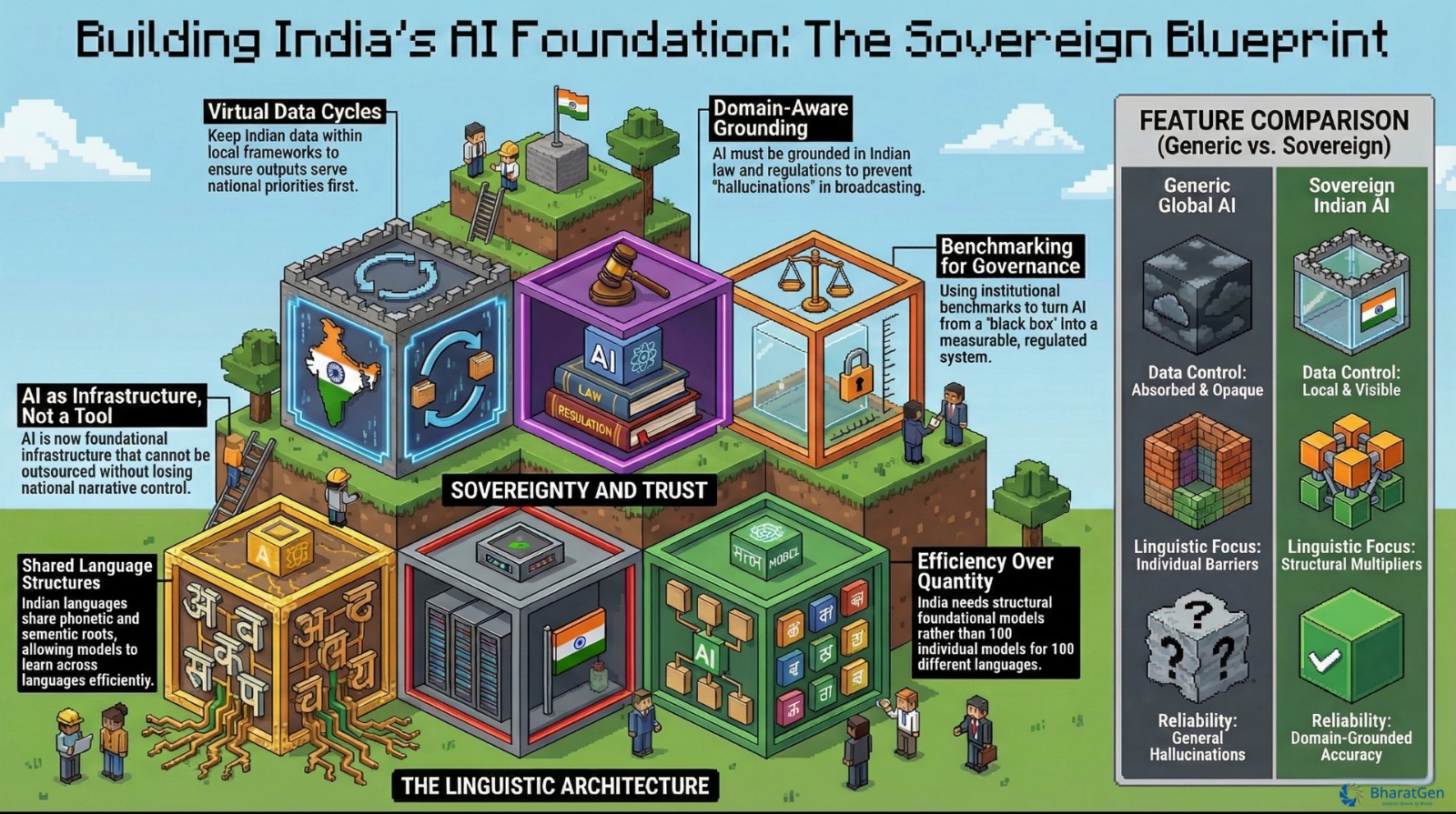
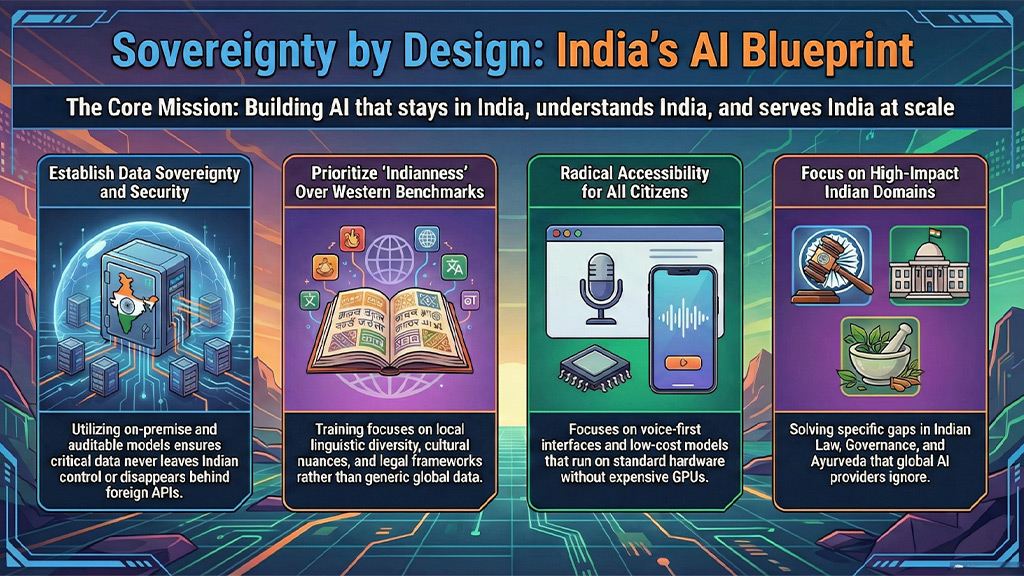
Building AI for India, not just in India
When Prof. Ganesh Ramakrishnan spoke about India’s AI ecosystem, the conversation shifted from adoption to design.
India is not short of AI tools. What it has been short of is AI that understands India.
He walked through the country’s foundational AI efforts:
- Nationally funded
- Institutionally collaborative
- Open-source by default
- Multilingual by design
The emphasis was not on scale alone, but on data efficiency, explainability, and inclusion.
One analogy stood out
India does not need only AI highways. It also needs state highways.
Large foundational models are powerful, but small, domain-specific models solve most real problems — especially in education, where bandwidth is limited and contexts are local.
This matters deeply for ODDE.
Offline-first AI. Lightweight models. Regional language support. These are not edge cases. They are the mainstream.
Language is where inclusion either succeeds or fails
India’s education divide is not just economic. It is linguistic.
English-only AI systems silently exclude millions of capable learners. Translation is not enough. Understanding context, idioms, and learning styles matters.
The work being done across Indian languages — including low-resource languages and dialects — reflects a crucial shift
Language is not a feature. It is the foundation.
By leveraging similarities across Indian languages and building participatory datasets, the ecosystem is moving toward AI that feels native rather than imported.
Efforts aligned with national missions like Bhashini reinforce this direction.
The uncomfortable truth about employability
One statistic hung heavy over the discussion
40 percent of graduates are unemployable.
This is not a student failure. It is a system failure.
Curricula that lag industry reality. Faculty unsupported in digital pedagogy. Accreditation processes that cannot keep pace with institutional growth.
Here, AI emerges as an unlikely ally to credibility.
AI-assisted accreditation. Automated data validation. Employer-verifiable credentials. Continuous curriculum relevance mapping.
These are not futuristic ideas. They are necessary corrections.
Without them, ODDE risks becoming scalable irrelevance.
What industry sees that academia often doesn’t
Industry voices from Industry voices from Google, Microsoft, Tata Consultancy Services and HP converged on one point, and HP converged on one point
Learning is becoming continuous, modular and personalized.
Degrees are no longer endpoints. They are checkpoints.
AI enables
- Hyper-personalized learning journeys.
- Scalable assessments without integrity loss.
- Teacher upskilling at population scale.
- Alignment between skills taught and skills hired.
TCS’s experience of assessing hundreds of millions of candidates underscored that scale and integrity do not have to be trade-offs — if AI is designed responsibly.
Teachers, AI and the fear that misses the point
The question that always arises eventually did here too
Will AI replace teachers?
The answer, spoken and unspoken, was more nuanced.
AI will not replace teachers.
But it will change which teachers succeed.
Educators who see AI as a collaborator gain time for mentoring, curiosity, and creativity. Those who resist it risk becoming bottlenecks rather than guides.
Crucially, emotional intelligence remains human territory. Motivation, empathy, moral judgment — these cannot be automated.
As Prof. Ganesh and others emphasized, students must be taught how to think with AI, not how to accept AI.
Question it. Verify it. Explain it. Argue with it.
That is education.
Ethics is not a footnote
Several speakers reminded the room that AI mirrors society — biases included.
Without governance, AI can widen exactly the divides education is meant to bridge.
Offline access. Disability inclusion. Rural connectivity. Teacher training. Policy literacy.
These are not peripheral concerns. They determine whether AI becomes a force for democratization or exclusion.
Programs that have already trained tens of thousands of teachers show that responsible scaling is possible — but only when ethics is treated as design, not compliance.
A future anchored in values, not just capability
The conversation closed on a principle that quietly tied everything together Sarbajana Hitaya Sarbajana Sukhai welfare and happiness for all.
AI-enabled ODDE, as envisioned here, is not about efficiency alone. It is about dignity. About relevance. About giving learners — regardless of geography or language — a fair chance to grow.
The upcoming AI Impact Summit 2026 is expected to carry this momentum forward. But the direction is already clear.
India has a chance to build an education system that is technologically advanced, culturally grounded, and ethically intentional.
That opportunity should not be wasted.
The conclave reinforced a clear national consensus:
Source: PM Modi LinkedIn